
Flachdach abdichten unter Terrasse – ohne Abriss der bestehenden Abdichtung
Diese genutzte Terrasse dient gleichzeitig als Dachfläche über Wohnräumen.
Nach dem Auftreten einer Undichtigkeit wurde der Schaden gezielt lokalisiert und ohne Abriss der bestehenden Bitumenabdichtung instand gesetzt – mithilfe einer flüssigen Abdichtung, verstärkt mit SA Baustoffe Polyester-Geotextil 110 g/m².
Ausgangssituation
Bei diesem Objekt handelt es sich um eine genutzte Terrasse über dem 1. Obergeschoss, die gleichzeitig als Dachfläche für die darunterliegenden Wohnräume dient.
Die Dachkonstruktion war als Inversionsdach ausgeführt: Auf der bestehenden Bitumenabdichtung befand sich eine Kiesschicht, darauf lagen Betonplatten als Terrassenbelag.
Im Bereich eines Raumes im 1. Obergeschoss trat punktuell Feuchtigkeit an Decke und Wand auf. Die Nutzung der Terrasse im 2. Obergeschoss blieb dabei unverändert – Regenwasser konnte weiterhin durch die Fugen der Platten, die Kiesschicht und über die Abdichtung zur Dachentwässerung ablaufen.
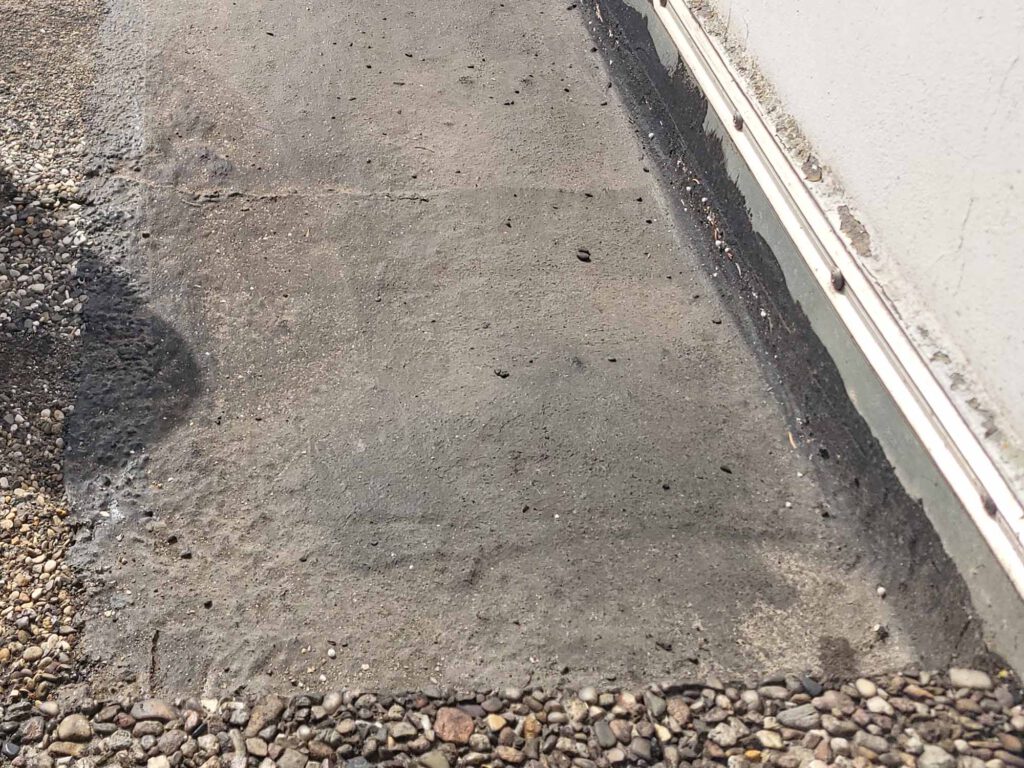
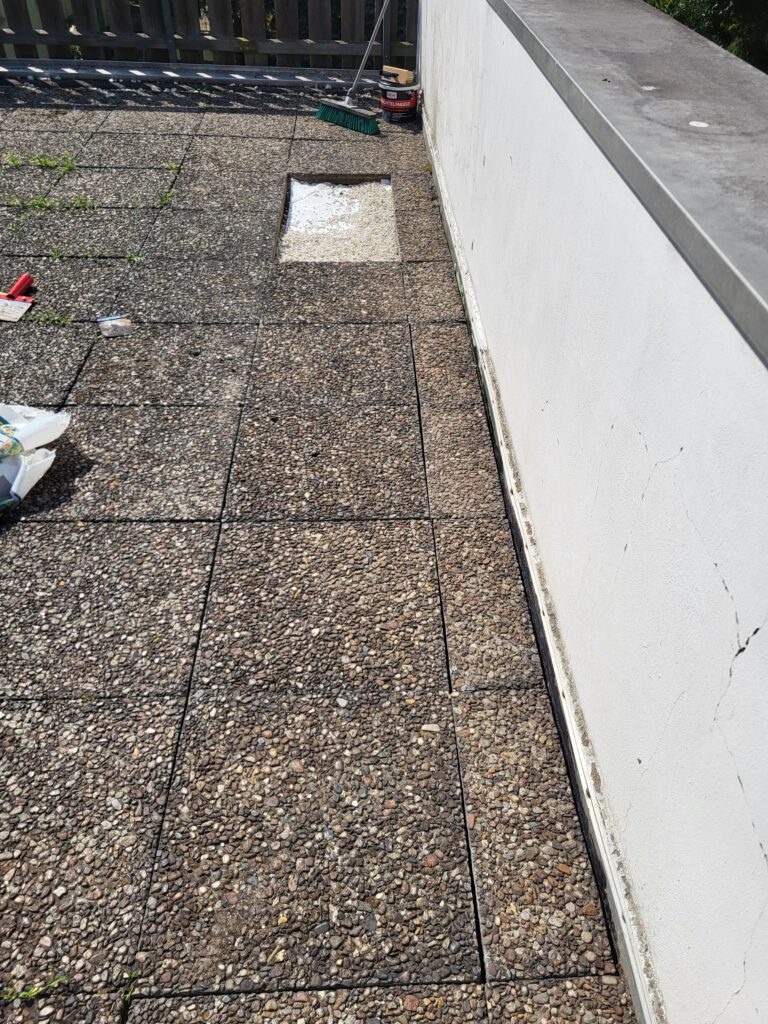
Nach dem Öffnen eines begrenzten Bereichs – durch Entfernen der Platten und des Kieses – zeigte sich die Ursache der Undichtigkeit:
beschädigte Anschlussbereiche an der Attika sowie mehrere feine Risse in der bestehenden Bitumenabdichtung.
Da das Gebäude kürzlich den Eigentümer gewechselt hatte und nicht bekannt war, wie viele Lagen der bestehenden Abdichtung vorhanden sind, sollte ein vollständiger Rückbau möglichst vermieden werden. Ziel war eine gezielte, sichere Instandsetzung, ohne den kompletten Dachaufbau zu entfernen.
Schadensanalyse und Entscheidungsfindung
Nach der Freilegung des betroffenen Bereichs konnte die Undichtigkeit eindeutig lokalisiert werden.
Die Schäden beschränkten sich auf den Anschlussbereich der Abdichtung an die Attika sowie auf mehrere feine Risse innerhalb des bestehenden Bitumenabdichtungssystems.
Grundsätzlich standen zwei Sanierungsvarianten zur Auswahl:
Variante 1:
Rückbau der bestehenden Abdichtung im betroffenen Bereich und Neuaufbau mit Bitumenbahnen.
Da nicht bekannt war, wie viele Abdichtungslagen bereits vorhanden sind, hätte diese Lösung einen hohen Arbeitsaufwand, zusätzliche Risiken sowie unnötige Eingriffe in den bestehenden Dachaufbau bedeutet.
Variante 2 (gewählt):
Gezielte Instandsetzung der beschädigten Bereiche mittels Flüssigabdichtung.
Durch die Kombination aus flüssiger Abdichtung und einer Armierung mit Polyester-Geotextil 110 g/m² konnte die Schadstelle zuverlässig repariert werden, ohne den gesamten Dachaufbau zu entfernen.
Diese Vorgehensweise ermöglichte eine technisch sichere und wirtschaftliche Lösung, die den bestehenden Aufbau erhält und den Eingriff auf das notwendige Maß beschränkt.
Warum Polyester-Geotextil 110 g/m² als Armierung eingesetzt wurde
Aufgrund der vorhandenen Risse, Übergänge und Anschlüsse war eine reine Flüssigabdichtung nicht ausreichend.
Die Dachfläche benötigte eine zusätzliche Armierung, um Bewegungen des Untergrunds dauerhaft aufzunehmen und neue Spannungsrisse zu vermeiden.
Da es sich bei diesem Objekt um eine nicht dauerhaft genutzte Dachfläche handelt, war der Einsatz eines Geotextils mit erhöhten mechanischen Belastungswerten technisch nicht erforderlich.
Stattdessen wurde gezielt ein Polyester-Geotextil (Armierungsvlies) mit 110 g/m² eingesetzt, das die notwendigen Anforderungen an eine Armierung innerhalb der Flüssigabdichtung für diesen Anwendungsfall vollständig erfüllt.
Durch die Wahl dieses Materials konnte auf eine höher dimensionierte, kostenintensivere Armierung verzichtet werden.
Dies ermöglichte eine spürbare Kostenersparnis für den Auftraggeber, ohne die Qualität, Funktion oder Lebensdauer der Abdichtung zu beeinträchtigen.
Das Vlies dient als Armierungseinlage innerhalb der Abdichtung und sorgt für eine gleichmäßige Kraftverteilung über die gesamte Fläche.
Das eingesetzte Material erfüllt die relevanten DIN-Anforderungen für Abdichtungssysteme und ist für Dach- und Terrassenflächen konzipiert, bei denen der bestehende Aufbau erhalten bleiben soll.
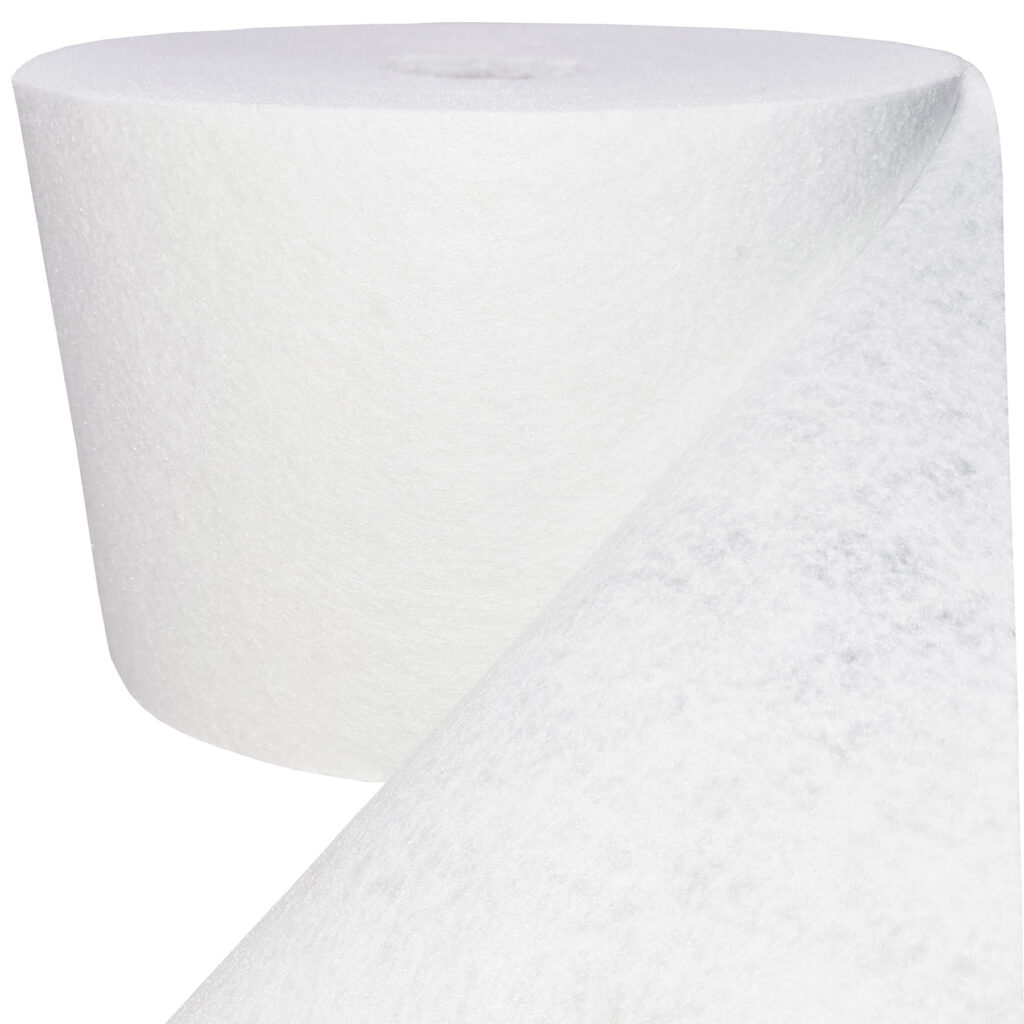
Hinweis zur Rollenbreite:
Die passende Rollenbreite richtet sich nach dem Einsatzbereich und den Details vor Ort – z. B. Flächen, Anschlüsse oder Durchdringungen.
Schritt-für-Schritt Umsetzung
Schritt 1: Freilegung und Vorbereitung des Schadbereichs
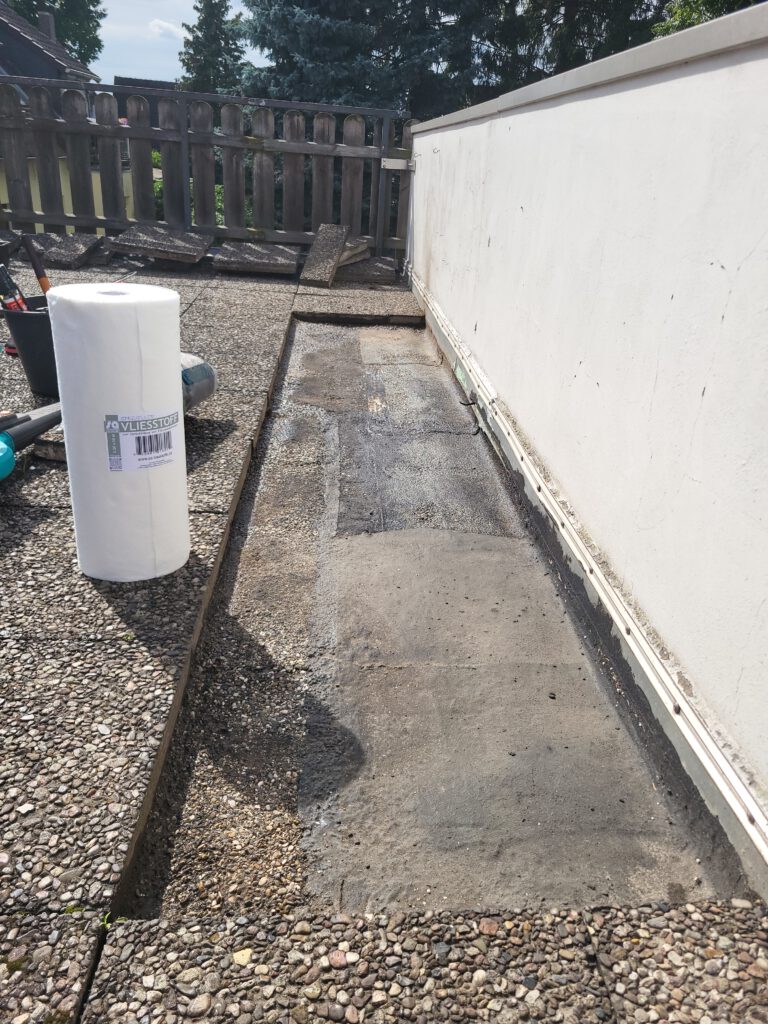
Zur Lokalisierung der Undichtigkeit wurde der betroffene Bereich der Terrasse gezielt geöffnet.
Dazu wurden die Betonplatten aufgenommen und die darunterliegende Kiesschicht entfernt, um Zugang zur bestehenden Bitumenabdichtung zu erhalten.
Nach der Freilegung zeigte sich der schadhafte Bereich im Anschluss an die Attika.
Vor Beginn der Abdichtungsarbeiten wurde die Oberfläche gereinigt und für die nachfolgende Instandsetzung vorbereitet, um eine sichere Haftung der Abdichtung zu gewährleisten.
Schritt 2: Erste Lage Flüssigabdichtung zur Vorbereitung
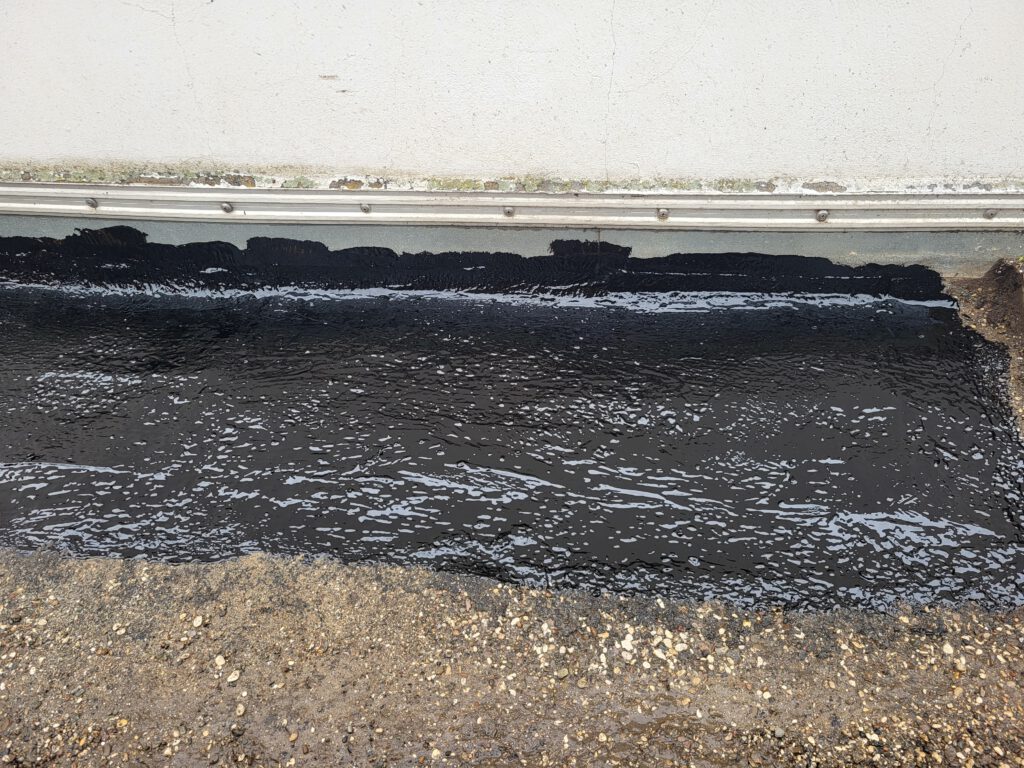
Nach gründlicher Reinigung der freigelegten Abdichtungsfläche wurde die erste Lage der Flüssigabdichtung aufgetragen.
Diese dient als Haft- und Ausgleichsschicht und bereitet den Untergrund optimal für die nachfolgende Armierung vor.
Schritt 3: Armierung mit Polyester-Geotextil 110 g/m²
In die frische erste Abdichtungslage wurde ein Polyester-Geotextil mit 110 g/m² eingebettet.
Das Geotextil übernimmt die Armierungsfunktion, überbrückt Risse zuverlässig und nimmt Bewegungen des Untergrunds auf – besonders im sensiblen Anschlussbereich an der Attika.
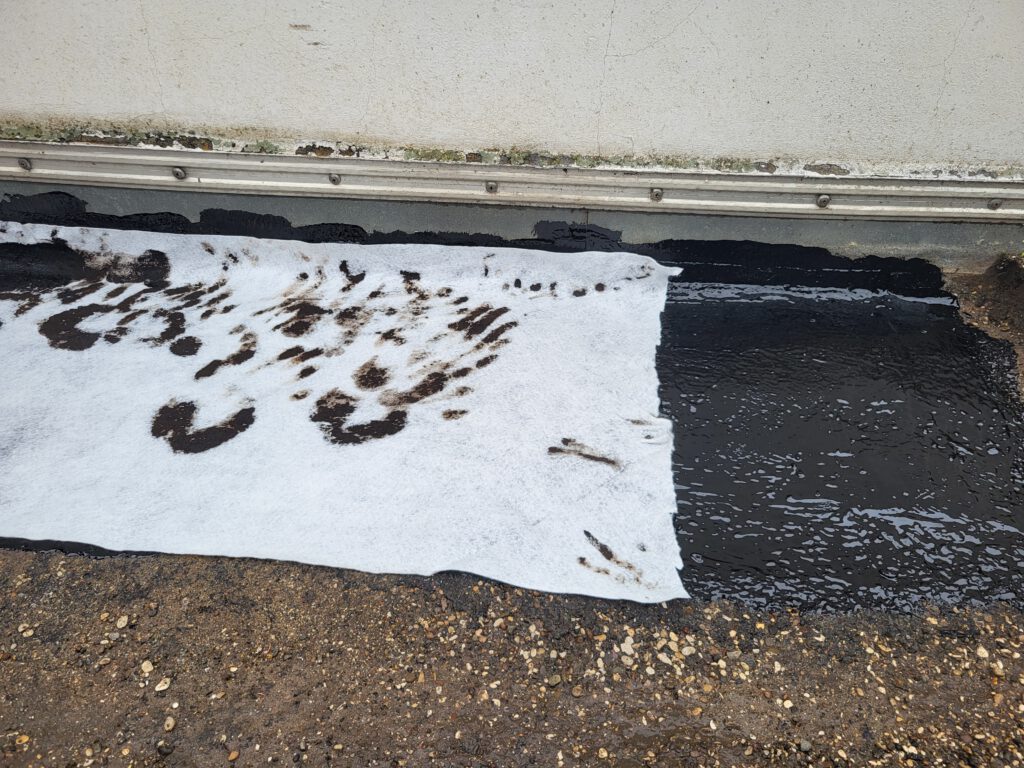
Schritt 4: Zweite Lage Flüssigabdichtung – vollständige Einbindung der Armierung
Anschließend wurde eine zweite Lage Flüssigabdichtung aufgebracht, die das Geotextil vollständig umschließt.
So entsteht eine homogene, nahtlose Abdichtung mit dauerhaft verstärktem Detailbereich.
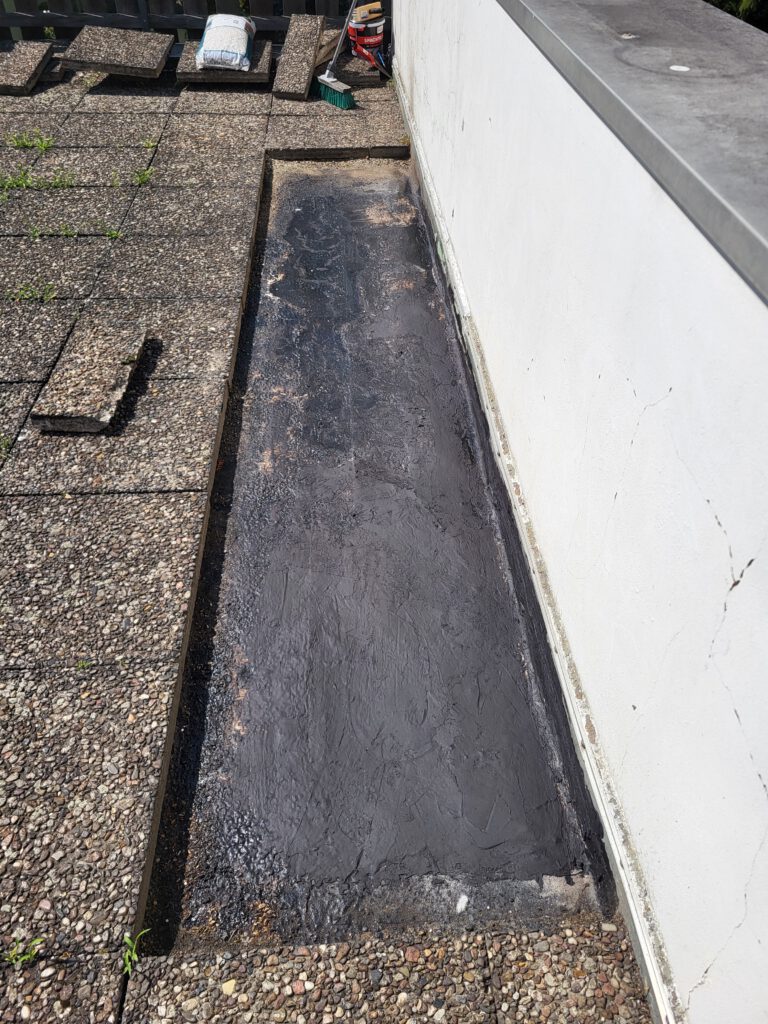
Schritt 5: Wiederherstellung des Dachaufbaus
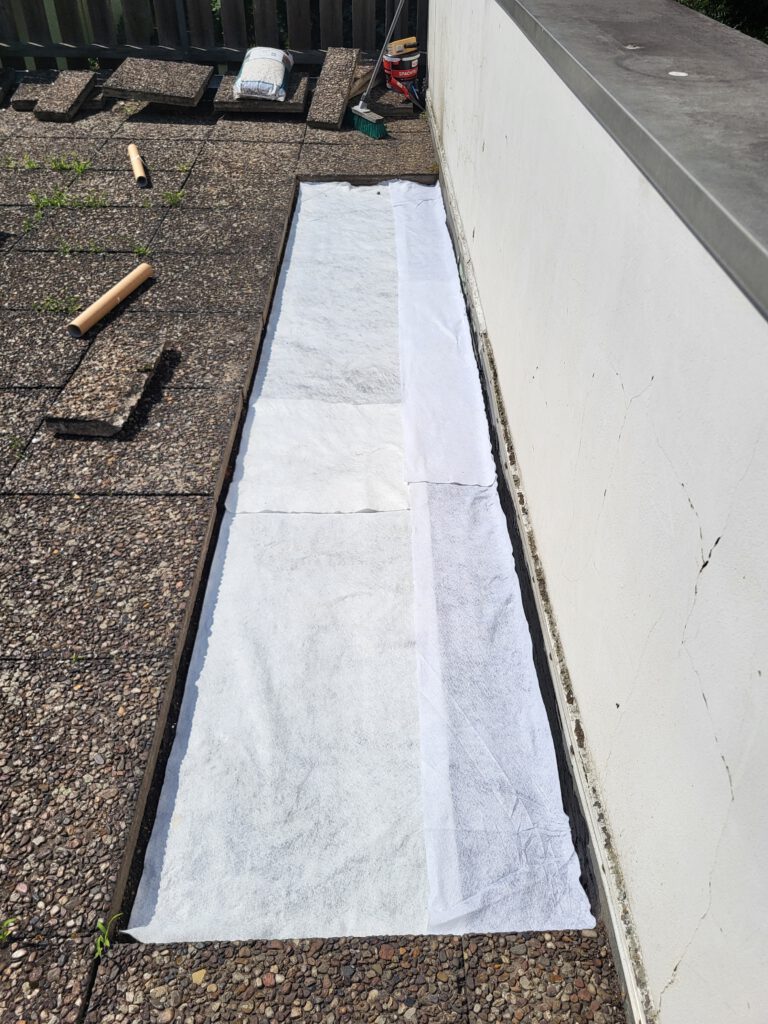
Nach vollständiger Aushärtung der Abdichtung wurde der Dachaufbau wiederhergestellt.
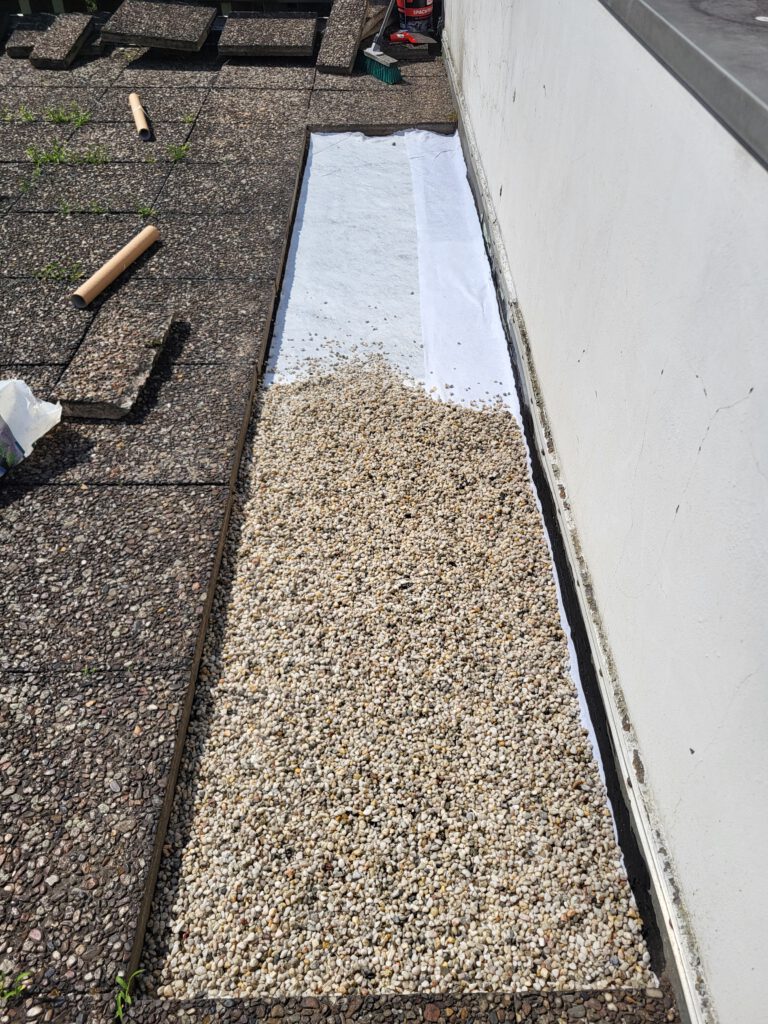
Zum Schutz der Abdichtung vor mechanischer Beanspruchung durch Kies und Platten wurde ein Geotextil als Schutzlage verlegt, anschließend Kies eingebracht und die Betonplatten wieder aufgelegt.
Die Terrasse ist damit wieder voll nutzbar – bei gleichzeitig dauerhaft geschützter Dachabdichtung darunter.
Fazit aus dem Projekt
Durch die gezielte Instandsetzung mit Flüssigabdichtung und SA Baustoffe Polyester-Geotextil 110 g/m² konnte die Undichtigkeit dauerhaft und ohne Eingriff in den gesamten Dachaufbau behoben werden.
Die Lösung eignet sich ideal für punktuelle Sanierungen von Flachdächern, bei denen eine wirtschaftliche und technisch sichere Reparatur gefragt ist.