
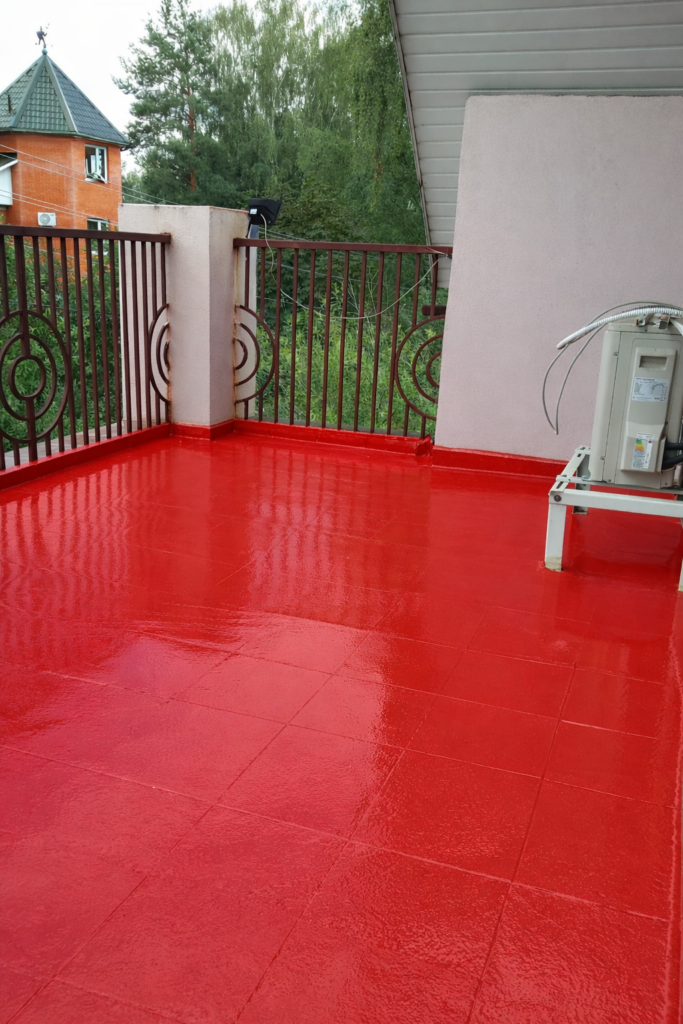
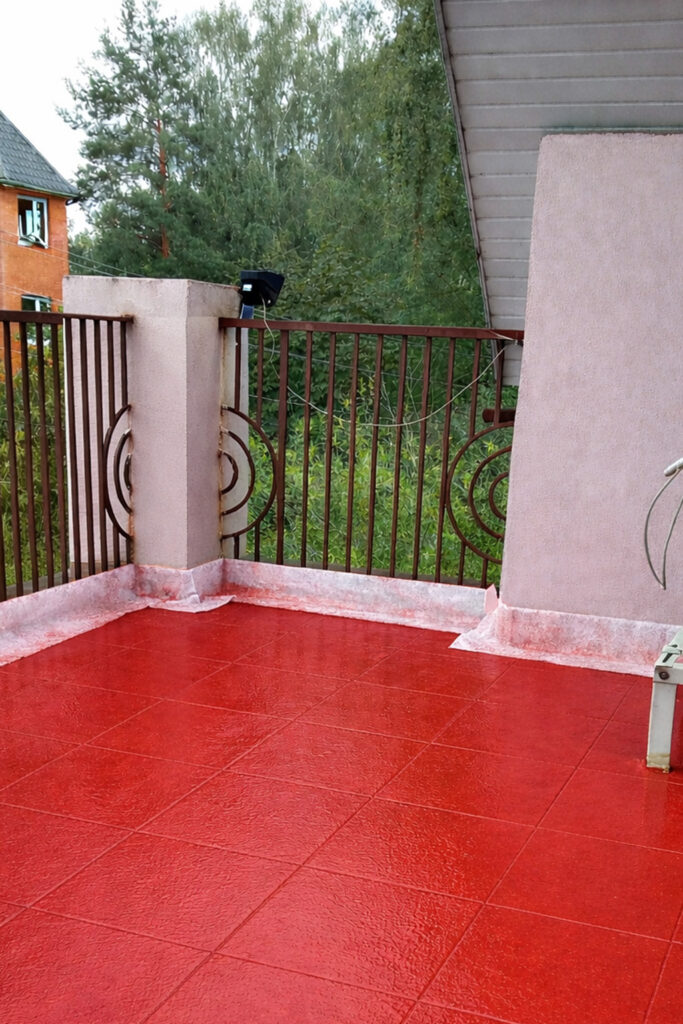
Sealing a balcony without removing tiles – permanently watertight in 2–3 days – without demolition

With liquid waterproofing + polyester fleece
👉 crack-bridging • waterproof • tear-free

Is your balcony leaking and water seeping through the tile joints?

Often there is no visible damage – yet moisture still penetrates through joints and connections.

A complete demolition is expensive, time-consuming, and often unnecessary.

In this example, we show how such a balcony was permanently sealed – without demolition.

✔ without dismantling the tiles
✔ permanently sealed
✔ also suitable for DIY enthusiasts

Materials for balcony waterproofing

For this sealing you will need:

✔ Liquid waterproofing
Polyester fleece for reinforcement
✔ Primer for tiles
✔ Roller and brush
✔ Topcoat for UV and surface protection

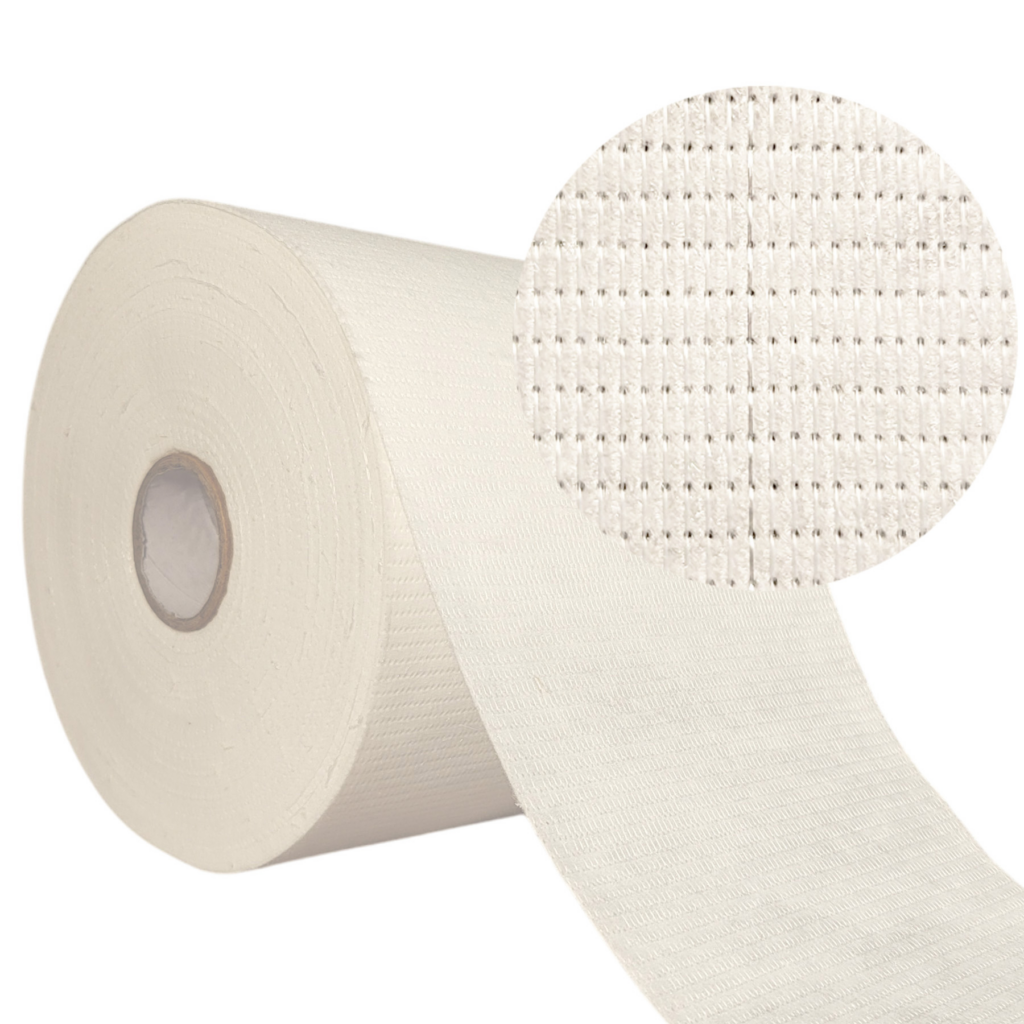
The polyester fleece is the core component of the waterproofing system. It reinforces the liquid waterproofing, bridges cracks, and ensures that the waterproofing remains permanently durable and long-lasting.

Our recommendation: Polyester fleece 120 g/m².

Why does a balcony leak even though everything looks intact?

  • At first glance, everything seems to be in order:
    The tiles are undamaged, the grout is present, and there is no visible damage.

    Nevertheless, water can already penetrate unnoticed – especially through:

    • fine microcracks in joints and transitions
    • Connections to wall and railing
    • invisible weak points in the existing seal

    👉 The problem is often not visible – but it already exists.

What solutions are there?

Basically, there are two ways to repair a leaky balcony:

1. Complete renovation (including demolition)
The existing tiles will be removed and the entire structure will be rebuilt.
This solution is technically safe, but involves significant effort and expense.

2. Sealing without demolition (as in this example)
The waterproofing is applied directly onto the existing tiles – without dismantling.
This solution is significantly faster, more cost-effective, and in many cases perfectly adequate.

In this case, sealing without demolition was deliberately chosen.

BEFORE, AFTERWARDS

From a leaky balcony to a permanently sealed surface

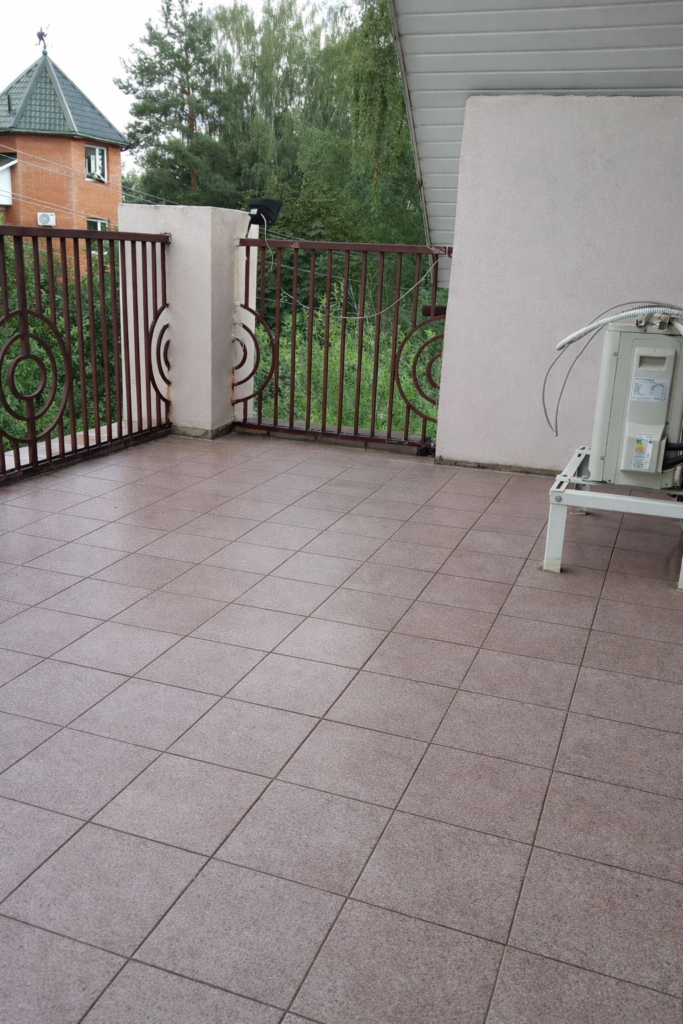
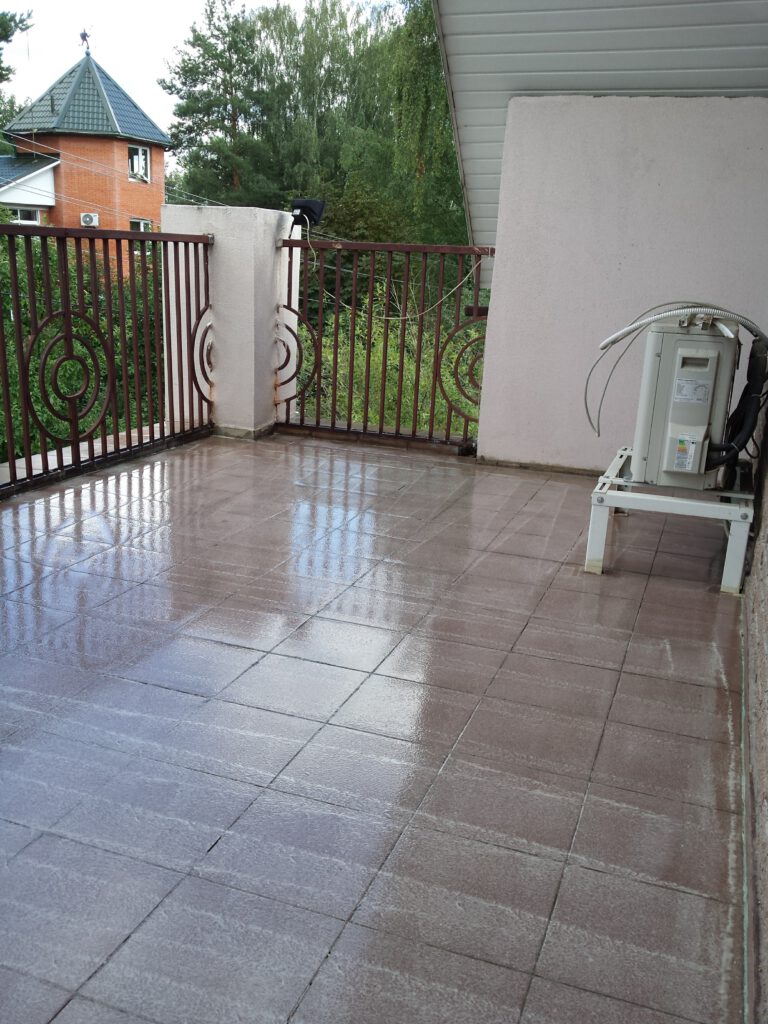
Before: Visually intact tiles, but moisture had already penetrated the tiles.

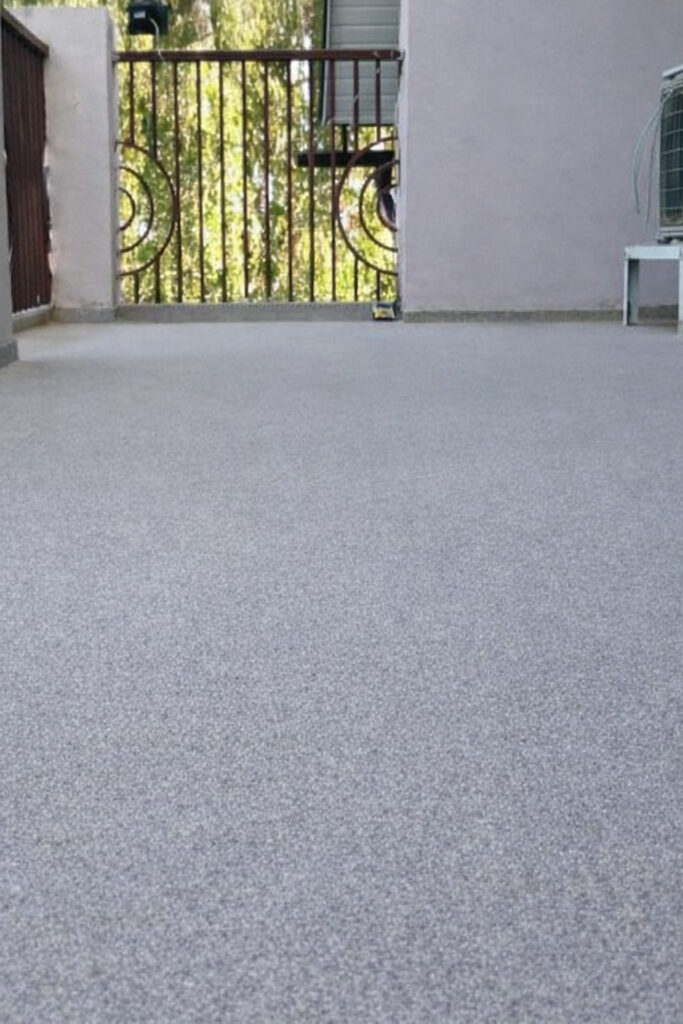
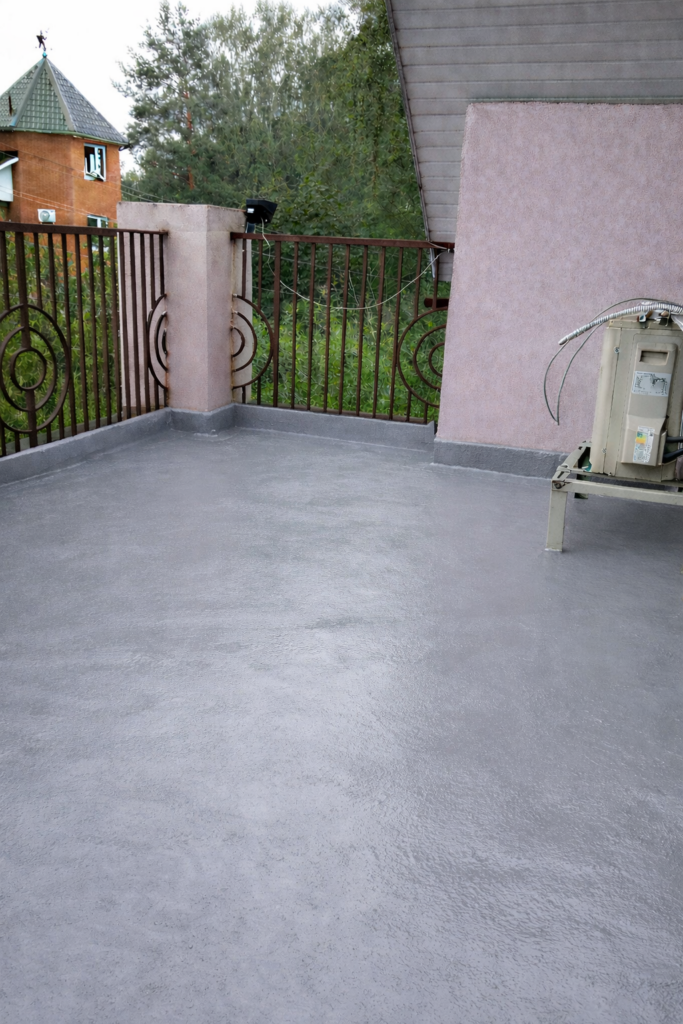
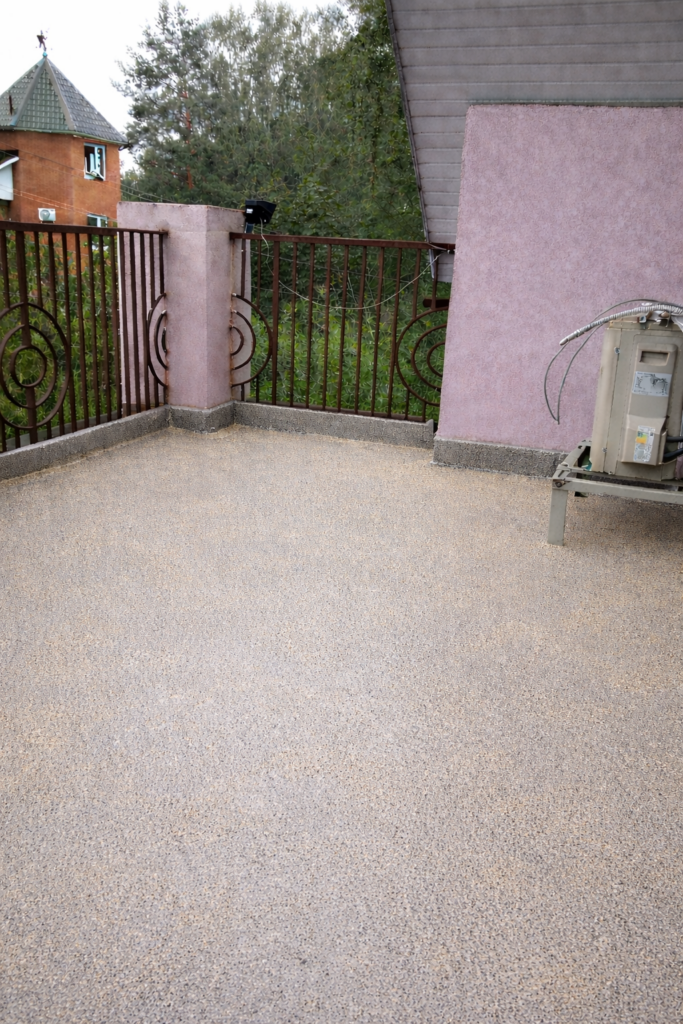
Afterwards: Seamless, permanently sealed surface

Balkon vor Abdichtung mit alten Fliesen und Feuchtigkeitsproblemen
Fertiger Balkon mit grauer Topcoat Abdichtung nach Sanierung ohne Fliesen entfernen

The solution: Liquid waterproofing with polyester fleece

Instead of removing the existing tiles, a modern liquid waterproofing system was applied directly to the surface and reinforced with polyester fleece.

The liquid sealant ensures a seamless, waterproof surface.
The polyester fleece plays a crucial role in this process:

👉 It strengthens the seal, makes it crack-bridging and permanently resilient.

Without this reinforcement, a long-term reliable seal would not be possible.

The right fleece for this project

For sealing a balcony without removing the tiles, we recommend our Polyester fleece 120 g/m².

It can be perfectly impregnated with liquid sealants and forms a permanently elastic and crack-bridging reinforcement layer.

This ensures that the seal remains permanently reliable even with temperature changes and slight movements of the substrate.

Advantages: 

✔ Extra strong – 120 g/m²

✔ Excellent absorbency

✔ High tear resistance

✔ For balconies, terraces and flat roofs

✔ Suitable for PU, PMMA, bitumen and acrylic seals

✔ Free delivery within Germany

Our recommendation for this application: Polyester fleece 120 g/m²

vs120 15 9

This is how the system works (sealing structure)

In this case, the sealing system consists of several coordinated layers that together form a permanently sealed and durable surface:

  • primer
  • Liquid waterproofing (1st layer)
  • polyester fleece
  • Liquid waterproofing (2nd layer)
  • Quartz sand (optional)
  • Topcoat

Step-by-step implementation

Step 1: Cleaning and priming

The surface is thoroughly cleaned and then primed.
The primer ensures optimal adhesion of the subsequent waterproofing to the tiles.

Balkon mit aufgetragener Grundierung vor der Abdichtung mit Flüssigkunststoff

Step 2: First sealing layer

The first layer of liquid sealant is applied evenly to the dry, primed surface and has a layer thickness of approximately 1 mm.

It forms the basis for the subsequent embedding of the polyester fleece.

Erste Schicht Flüssigabdichtung auf Balkonfliesen aufgetragen

Step 3: Seal details

Critical areas such as corners, connections and transitions are specifically reinforced with polyester geotextile of appropriate width.

These areas are particularly prone to leaks and must be carefully prepared.

The geotextile is placed into the still fresh sealant and pressed down with a roller to ensure optimal adhesion and avoid air inclusions.

Abdichtung von Ecken und Anschlüssen mit Polyester-Vlies am Balkon

Step 4: Embed polyester fleece (crucial for durability)

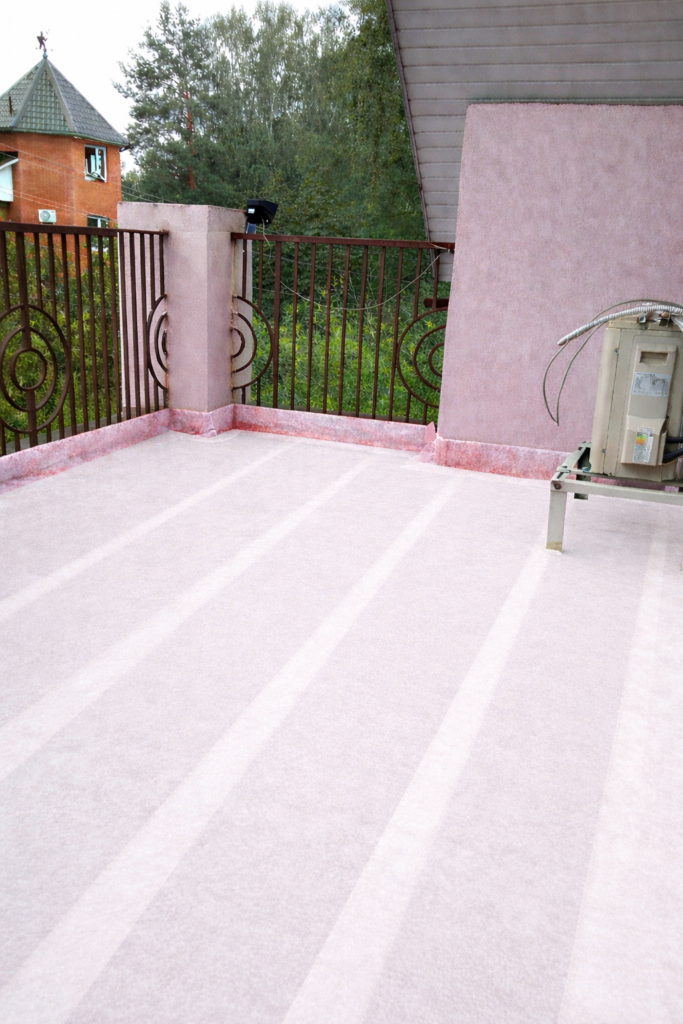
After reinforcing all critical detail areas, the polyester fleece is laid across the entire surface of the still damp sealant and also pressed down with a roller.

This ensures complete saturation, optimal adhesion and prevents air inclusions.

The strips are laid with an overlap of at least 5 cm.

👉 This step is crucial for the durability of the entire seal.
The fleece ensures reliable crack bridging and a permanently stable seal.

Flächige Verstärkung des Balkons mit Polyester-Vlies in Flüssigabdichtung eingebettet

Pro tip

In order for the polyester fleece to develop its full reinforcing effect, it must be completely saturated with the liquid sealant.

Make sure that no air bubbles or dry spots remain. Only then will a permanently crack-bridging seal be created.

✅ For this project we recommend our 120 g/m² polyester fleece.

Step 5: Second sealing layer

After the first layer has hardened, a second layer of liquid sealant with a minimum thickness of approximately 1 mm is applied – so that the fleece is completely covered.

This creates a closed, seamless and permanently waterproof surface.

Zweite Schicht Flüssigabdichtung auf Balkon mit Vliesarmierung

Step 6: Sprinkle in quartz sand (optional)

For slip-resistant surfaces, quartz sand can be sprinkled into the fresh layer.

This is particularly useful for balconies that can be walked on.

Quarzsand auf frische Abdichtung gestreut für rutschfeste Oberfläche Balkon

Step 7: Apply topcoat

The final coating protects the seal from UV radiation and mechanical stress.

At the same time, it ensures a smooth and visually appealing surface.

Fertiger Balkon mit grauer Topcoat Abdichtung nach Sanierung ohne Fliesen entfernen

Why polyester fleece is crucial

Various materials can be used for balcony waterproofing:

  • Polyurethan
  • bitumen
  • Acrylic
  • Liquid plastics

👉 However, the principle remains the same:

A permanently functioning seal requires flexible, crack-bridging reinforcement.

This is exactly where polyester fleece comes into play.

Important:

Polyester fleece:

  • absorbs movements of the ground
  • prevents stress cracks
  • ensures an even distribution of material
  • significantly increases the service life of the seal.

👉 In practice, it is a crucial component of modern sealing systems. 

Without fleece, stress cracks develop – the most common cause of leaks.

The right choice determines safety and durability.

Which fleece is suitable for balcony waterproofing?

Recommended solution for balconies:


👉 Polyester fleece 120 g/m²

✔ For walkable areas
✔ Maximum protection against cracks
✔ Compatible with all liquid waterproofing membranes


vs120 15 9

Note regarding roll width:

  • 15 cm – Crack repair, internal and external corners, parapets

  • 25 cm – like 15 cm, but with a greater safety margin

  • 35 cm and 50 cm – surface reinforcement of roof areas and foundation waterproofing

The result: A permanently watertight balcony

Seamless sealing

No joints, no weak points – water has no chance of penetrating.

Weather resistant

UV-resistant, frost-resistant and mechanically durable – ideal for outdoor areas.

Walkable and durable

Suitable for daily use – lasts for many years without problems.

FAQ - Frequently Asked Questions

Is it possible to seal a balcony without removing the tiles?
✅ Yes, that's easily possible with liquid waterproofing and fleece.

How long will the seal last?
✅ If done correctly, for many years.

Which material is the best?
✅ Polyurethane, bitumen or acrylic – the combination with fleece is crucial.

Is polyester fleece necessary?
✅ It is recommended in practice for permanently functioning and crack-bridging systems.

How much does it cost to waterproof a balcony without demolition?
✅ The costs depend on the area and material, but are significantly cheaper than a complete renovation.

Can I do the sealing myself (DIY)?
✅ Yes, with the right instructions and materials, it is also possible for DIY enthusiasts to implement the project.

Now you can permanently seal your balcony – without demolition.

Using the right polyester fleece will create a secure, long-lasting seal – regardless of the liquid material used.

Avoid consequential damage caused by penetrating moisture and rely on a proven solution.

✔ Suitable for connections, details and surfaces
✔ Crack-bridging and permanently flexible
✔ Can be used with PU, bitumen and acrylic

Shopping Basket